
Table of Contents
- Introduction
- What Are Vape Coils?
- Understanding Ohms (Ω)
- MTL, RDL & DTL Vaping Styles
- Coil Materials Explained
- How Wattage Affects Coils
- How to Extend Coil Lifespan
- 12‑Question FAQ
Introduction – Vape Coils Guide
Welcome to the most comprehensive Vape Coils Guide designed specifically for beginners and intermediate vapers who want to understand how coils work, how ohms influence performance, and how to choose the right coil for their preferred vaping style. Coils are the heart of every vape device, whether you’re using a simple pod kit or a more advanced tank. They determine flavour intensity, vapour warmth, cloud size, throat hit, battery usage, and even how long your e‑liquid lasts.
As you explore this guide, you’ll find helpful internal links to relevant products and categories on the White Vape Co website. These links are placed naturally throughout the article so you can browse coils, tanks, devices, and e‑liquids while learning.
Understanding coils doesn’t need to be complicated. With clear explanations, highlight boxes, and structured tables, this Vape Coils Guide will help you make confident decisions and get the best performance from your device.
What Are Vape Coils?
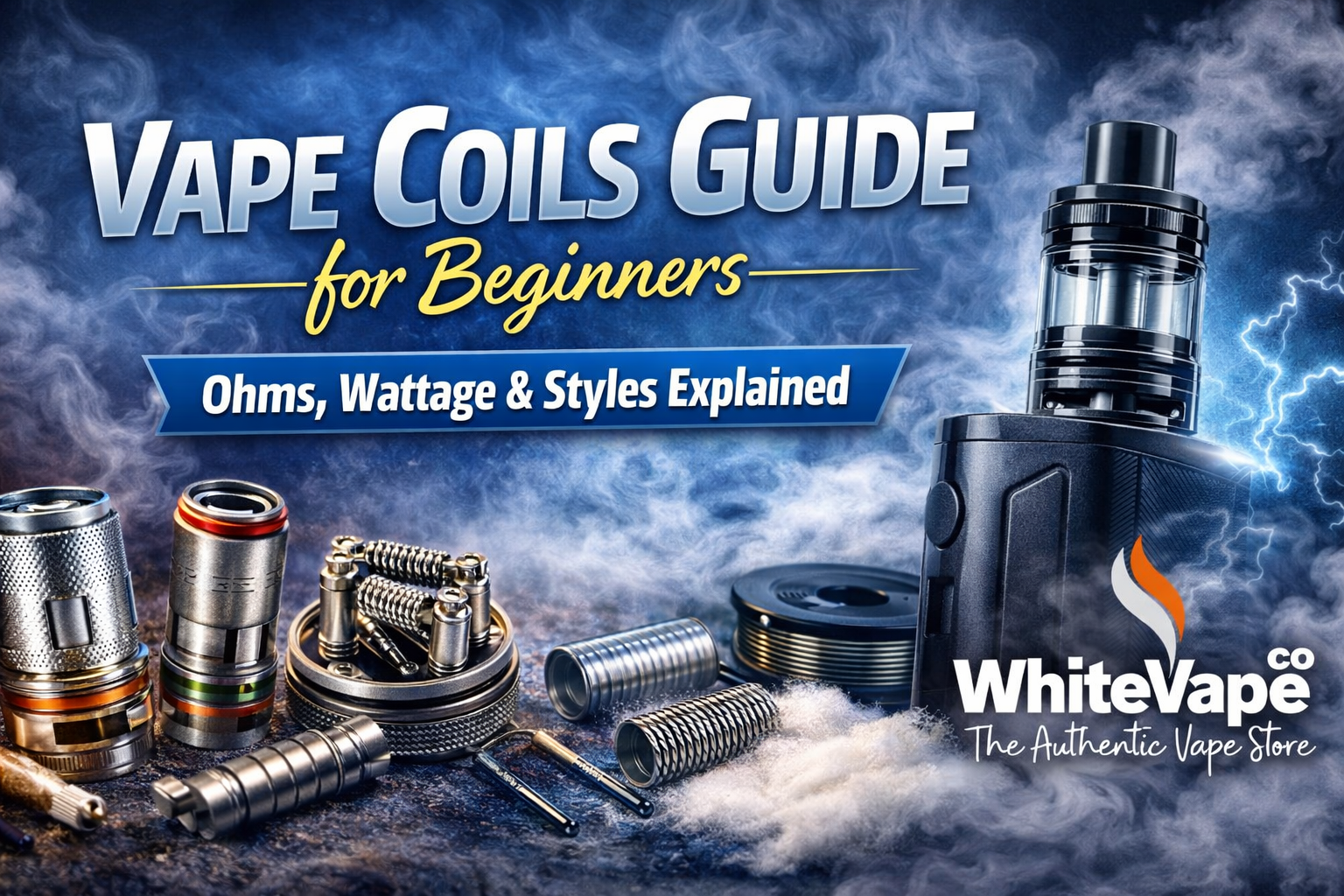
A vape coil is the heating element inside your pod or tank. It consists of a metal heating element — usually Kanthal, stainless steel, nichrome, or mesh — wrapped around a cotton wick. When your device sends power to the coil, the metal heats up, vaporising the e‑liquid absorbed into the cotton. This simple process is the foundation of vaping, but the details matter more than most beginners realise.
Info: Coils vary in resistance, material, structure, and airflow design. These differences dramatically affect flavour, vapour production, and throat hit.
Most modern coils are designed for convenience and simply push into your pod or tank. You can explore a wide range of pre‑made coils in our Vape Coils Collection. For advanced users who prefer building their own coils, we also stock rebuildable wire, coil‑building tools, and RDA decks.
Although coils look small and simple, they are the single biggest factor in how your vape performs. Choosing the right coil can transform your experience, especially when paired with the correct e‑liquid from our 10ml freebase, nic salt, or shortfill ranges.
Understanding Ohms (Ω): The Core of This Vape Coils Guide
Ohms measure electrical resistance. In vaping, resistance determines how much power the coil needs and how it behaves when heated. This is one of the most important concepts in this Vape Coils Guide, because ohms directly influence flavour, vapour temperature, cloud size, and battery life.
In simple terms, high‑resistance coils (high ohms) require less power and produce a cooler, tighter vape. Low‑resistance coils (low ohms) require more power and produce warmer vapour and bigger clouds.
| Resistance (Ω) | Vapour Temperature | Draw Style | Wattage Range | Best E‑Liquids |
|---|---|---|---|---|
| 1.0Ω – 1.8Ω | Cool | MTL | 8–15W | 50/50, Nic Salts |
| 0.6Ω – 0.9Ω | Warm | RDL | 15–30W | 50/50 or 60/40 |
| 0.1Ω – 0.5Ω | Hot | DTL | 40–80W+ | 70/30 High‑VG |
Key Takeaway: High‑ohm coils are ideal for MTL vaping with nic salts. Low‑ohm coils are designed for DTL cloud production with high‑VG liquids.
When choosing coils, always check the recommended wattage printed on the coil itself. This ensures you stay within safe limits and avoid burning the cotton. If you’re unsure which coil suits your device, browse our Vape Devices section — each product page includes compatible coils and recommended e‑liquids.
MTL, RDL & DTL: Matching Your Coil to Your Vaping Style – Vape Coils Guide
One of the most important decisions you’ll make as a vaper is choosing your preferred inhalation style. This Vape Coils Guide breaks down the three main styles so you can match your coil to your ideal experience.
MTL (Mouth‑to‑Lung)
MTL vaping mimics the sensation of smoking a traditional cigarette. You draw vapour into your mouth first, then inhale it into your lungs. This style is ideal for beginners, ex‑smokers, and anyone who prefers a tighter, more controlled inhale.
Best For: Nic salts, 50/50 liquids, low wattage devices, cigarette‑like draw.
MTL coils typically have a resistance between 1.0Ω and 1.8Ω. They use less power, produce smaller clouds, and deliver a stronger throat hit. If you enjoy a discreet vape or want to conserve battery life, MTL is the perfect choice. Explore suitable devices in our Vape Devices category.
RDL (Restricted Direct‑to‑Lung)
RDL vaping sits between MTL and DTL. It offers a looser draw than MTL but still provides some restriction, making it ideal for vapers who want more vapour without the full intensity of DTL cloud chasing.
Info: RDL coils usually fall between 0.4Ω and 0.9Ω, offering warm vapour and moderate cloud production.
RDL is becoming increasingly popular thanks to modern pod systems that support mid‑range wattage. These coils pair well with 50/50 or 60/40 liquids, depending on the device. You can find compatible tanks in our Vape Tanks section.
DTL (Direct‑to‑Lung)
DTL vaping is designed for cloud chasers and flavour enthusiasts. You inhale vapour directly into your lungs, similar to taking a deep breath. This style requires low‑resistance coils, high wattage, and high‑VG e‑liquids.
Best For: High‑VG shortfills, sub‑ohm tanks, cloud production, warm vapour.
DTL coils typically range from 0.1Ω to 0.4Ω. They produce large clouds and smooth vapour but consume more e‑liquid and battery power. If you enjoy bold flavours and dense vapour, explore our Shortfill E‑Liquids and sub‑ohm tanks in the Tanks category.
Coil Materials Explained – Vape Coils Guide
Coil material affects flavour, ramp‑up time, and compatibility with different vaping modes. This section of the Vape Coils Guide explains the most common materials and how they influence performance.
| Material | Characteristics | Best Use |
|---|---|---|
| Kanthal | Durable, stable, slow ramp‑up | Wattage mode |
| Stainless Steel (SS316L) | Fast ramp‑up, clean flavour | Wattage or temp control |
| Nichrome (Ni80) | Very fast heating, warm vapour | Sub‑ohm coils |
| Mesh | Even heating, excellent flavour | Modern pods & tanks |
Key Takeaway: Mesh coils offer the best flavour and consistency for most vapers.
How Wattage Affects Your Coil
In this Vape Coils Guide, we learn that wattage is one of the most influential factors in how your vape coil performs. Every coil is designed to operate within a specific wattage range, which is usually printed directly on the coil housing. Staying within this range ensures the cotton remains saturated, the metal heats evenly, and the vapour remains smooth and flavourful. Exceeding the recommended wattage can cause the cotton to burn, while using too little power can result in weak vapour and flooding.
Understanding wattage is essential for anyone reading this Vape Coils Guide, because wattage directly affects flavour intensity, vapour temperature, coil lifespan, and even how quickly you go through e‑liquid. If you’re unsure which wattage your device supports, you can browse compatible kits in our Vape Devices section, where each product page includes recommended coils and wattage ranges.
Warning: Running a coil above its recommended wattage will burn the cotton, permanently damaging the coil and producing a harsh, burnt taste.
When wattage is too low, the coil may struggle to vaporise the e‑liquid efficiently. This can cause gurgling, spitting, and a generally unsatisfying vape. On the other hand, too much wattage can cause the coil to overheat, leading to dry hits and reduced coil lifespan. The key is to find the sweet spot — usually the middle of the recommended wattage range — where flavour, vapour, and smoothness are perfectly balanced.
| Wattage Issue | Symptoms | Solution |
|---|---|---|
| Too Low | Weak flavour, cool vapour, gurgling | Increase wattage gradually |
| Too High | Burnt taste, overheating, fast coil burnout | Lower wattage immediately |
| Correct Range | Balanced flavour, smooth vapour, consistent performance | Stay within recommended wattage |
Many modern pod systems automatically adjust wattage based on the coil you insert, making them ideal for beginners. If you prefer a more customisable experience, sub‑ohm tanks and advanced mods allow you to fine‑tune wattage manually. You can explore these options in our Vape Tanks and Devices categories.
How to Extend Coil Lifespan
Coils don’t last forever, but with proper care, you can significantly extend their lifespan. Most coils last between five and fourteen days depending on usage, e‑liquid type, wattage, and maintenance. This section of the Vape Coils Guide explains how to get the most out of every coil, saving you money and improving your vaping experience.
Info: Coil lifespan varies depending on e‑liquid sweetness, wattage, and how frequently you vape.
The first and most important step is priming your coil in this Vape Coils Guide. This involves saturating the cotton with e‑liquid before using it for the first time. Simply apply a few drops of e‑liquid to the exposed cotton areas, insert the coil into your tank or pod, fill the reservoir, and wait at least five minutes before vaping. This prevents dry hits and ensures the cotton is fully soaked.
Another key factor is using the correct e‑liquid ratio. High‑VG liquids are thicker and designed for sub‑ohm coils, while 50/50 liquids are ideal for MTL coils. Using the wrong ratio can cause wicking issues, dry hits, or flooding. If you’re unsure which e‑liquid suits your coil, browse our Nic Salts for MTL coils or our Shortfills for DTL coils.
Wattage also plays a major role in coil longevity. Staying within the recommended range prevents overheating and reduces stress on the cotton. If you enjoy warm vapour, try increasing wattage gradually rather than jumping to the maximum setting. This helps you find the perfect balance between flavour and coil preservation.
Finally, avoid chain vaping. Taking multiple puffs in quick succession doesn’t give the cotton enough time to re‑saturate with e‑liquid, increasing the risk of dry hits. Allowing a few seconds between puffs helps maintain coil health and ensures consistent flavour.
Choosing the Right E‑Liquid for Your Coil
One of the most overlooked aspects of coil performance is e‑liquid compatibility. Different coils are designed for different e‑liquid viscosities, and using the wrong type can lead to poor performance or premature coil burnout. This Vape Coils Guide breaks down the ideal e‑liquid types for each coil category.
MTL coils, which typically have a resistance of 1.0Ω or higher, work best with thinner e‑liquids such as 50/50 blends or nic salts. These liquids wick quickly and efficiently, ensuring smooth vapour and consistent flavour. You can explore suitable options in our 10ml Freebase and Nic Salt categories and by reading on this Vape Coils Guide.
RDL coils, which fall between 0.4Ω and 0.9Ω, can handle slightly thicker liquids such as 60/40 blends. These liquids provide a balance between flavour and vapour production, making them ideal for mid‑range pod systems and hybrid tanks.
DTL coils, typically ranging from 0.1Ω to 0.4Ω, require high‑VG liquids such as 70/30 blends. These liquids are thicker and produce dense clouds, making them perfect for sub‑ohm tanks and high‑power devices. You can find a wide selection of high‑VG shortfills in our Shortfill E‑Liquids section.
| Coil Type | Resistance | Best E‑Liquid | Why It Works |
|---|---|---|---|
| MTL | 1.0Ω – 1.8Ω | 50/50, Nic Salts | Thin liquid wicks quickly |
| RDL | 0.4Ω – 0.9Ω | 60/40 | Balanced vapour and flavour |
| DTL | 0.1Ω – 0.4Ω | 70/30 High‑VG | Thick liquid supports high wattage |
Key Takeaway: Always match your e‑liquid ratio to your coil type. This prevents dry hits, flooding, and premature coil burnout.
How Airflow Affects Coil Performance
Airflow is another crucial factor in coil performance. It influences vapour temperature, cloud density, throat hit, and flavour intensity. Most modern tanks and pod systems include adjustable airflow, allowing you to fine‑tune your experience. This section of the Vape Coils Guide explains how airflow interacts with coil resistance and wattage.
For MTL vaping, a tight airflow setting is ideal. This creates a more concentrated vapour stream and enhances throat hit. MTL coils are designed to work with restricted airflow, so opening the airflow too much can dilute flavour and reduce satisfaction.
RDL vaping benefits from moderate airflow. Too tight and the vapour becomes overly warm; too open and the draw loses its characteristic restriction. Finding the right balance is key to achieving smooth, flavourful vapour.
DTL vaping requires wide‑open airflow. Low‑resistance coils generate significant heat, and unrestricted airflow helps cool the vapour while producing large clouds. If you enjoy airy, open draws, explore our sub‑ohm tanks in the Tanks category after reading this vape coils guide.
Common Coil Problems and How to Fix Them
Even with the right coil, wattage, and e‑liquid, issues can still occur from time to time. This section of the Vape Coils Guide explains the most common coil‑related problems and how to resolve them quickly. Understanding these issues helps you avoid unnecessary coil replacements and ensures a smoother vaping experience.
Burnt Taste
A burnt taste is one of the most unpleasant experiences for any vaper. It usually happens when the cotton inside the coil becomes scorched due to insufficient saturation or excessive wattage. If you experience a burnt taste, stop vaping immediately to avoid inhaling burnt cotton fumes, then refer back to this vape coils guide.
Warning: Once a coil is burnt, it cannot be repaired. It must be replaced.
To prevent burnt hits, always prime your coil, allow time for saturation, and stay within the recommended wattage range. If you’re unsure which coils are compatible with your device, browse our Vape Coils Collection for guidance.
Gurgling or Flooding
Gurgling occurs when too much e‑liquid enters the coil chamber. This can happen if the wattage is too low, the coil is worn out, or the tank is overfilled. Flooding can also occur when using thin e‑liquids in low‑resistance coils.
Info: Increasing wattage slightly or clearing excess liquid from the airflow can resolve most gurgling issues.
If flooding persists, consider switching to a thicker e‑liquid or replacing the coil. You can explore suitable e‑liquids in our 10ml, Nic Salt, and Shortfill categories and refer to this vape coils guide.
Weak Flavour
Weak flavour can be caused by low wattage, airflow that is too open, or a coil that is nearing the end of its lifespan. Adjusting wattage or tightening airflow can often restore flavour intensity. If the issue persists, it may be time to replace the coil.
Mesh coils generally offer the best flavour performance. If flavour is your priority, consider switching to a mesh‑based tank or pod system. You can explore compatible tanks in our Vape Tanks section and our vape coils guide.
How Often Should You Replace Your Coil?
In this Vape Coils guide we learn that Coil lifespan varies depending on your vaping habits, e‑liquid type, wattage, and device. Most vapers replace their coil every 5–14 days, but heavy users or those who prefer sweet e‑liquids may need to replace coils more frequently. This Vape Coils Guide outlines the key signs that your coil needs replacing.
| Sign | What It Means |
|---|---|
| Burnt taste | Cotton is scorched — replace immediately |
| Weak flavour | Coil is worn out or flooded |
| Gurgling | Too much liquid in the coil chamber |
| Darkened cotton | Coil is nearing end of life |
| Reduced vapour | Coil is clogged or burnt |
Key Takeaway: If your vape tastes burnt, muted, or inconsistent, it’s time to replace the coil.
To ensure you always have fresh coils available, you can stock up from our Vape Coils Collection. We offer coils for all major brands and devices. Refer to this Vape Coils Guide for pairing.
How to Choose the Right Coil for Your Device – Vape Coils Guide
Choosing the right coil can feel overwhelming, especially with so many options available. This Vape Coils Guide simplifies the process by breaking it down into three key factors: resistance, material, and e‑liquid compatibility.
1. Choose the Right Resistance
If you prefer a cigarette‑like draw with stronger throat hit, choose a high‑resistance MTL coil. If you enjoy warm vapour and moderate clouds, choose an RDL coil. For large clouds and intense flavour, choose a low‑resistance DTL coil.
2. Choose the Right Material
Mesh coils offer the best flavour and consistency, while Kanthal and Nichrome provide reliable performance for wattage mode. Stainless steel is ideal for vapers who enjoy temperature control.
3. Match Your E‑Liquid
Always match your e‑liquid ratio to your coil type. MTL coils require thinner liquids such as 50/50 blends or nic salts. DTL coils require thicker high‑VG liquids such as 70/30 blends.
If you’re unsure which coil suits your device, explore our Vape Devices section — each product page includes compatible coils and recommended e‑liquids.
12‑Question FAQ – Vape Coils Guide
This FAQ section is designed to answer the most common questions beginners have about coils. Use this page as a comprehensive Vape Coils Guide.
1. What is a vape coil?
A vape coil is the heating element inside your device that vaporises e‑liquid.
2. What does coil resistance mean?
Resistance, measured in ohms, determines how hot the coil gets and how much power it needs.
3. Which coil is best for beginners?
MTL coils between 1.0Ω and 1.2Ω are ideal for beginners.
4. What coil is best for nic salts?
High‑resistance MTL coils (1.0Ω or higher) work best with nic salts.
5. What coil is best for clouds?
Low‑resistance sub‑ohm coils between 0.1Ω and 0.4Ω produce the biggest clouds.
6. Why does my coil taste burnt?
Usually because the wattage is too high or the cotton is dry.
7. How long do coils last?
Most coils last between 5 and 14 days depending on usage.
8. Can I use high‑VG in MTL coils?
No. High‑VG e‑liquid is too thick for MTL coils.
9. Do mesh coils last longer?
Yes. Mesh coils heat evenly and typically last longer than wire coils.
10. Why does my coil flood?
Flooding is usually caused by low wattage or thin e‑liquid.
11. How do I prime a coil?
Apply e‑liquid to the cotton and let it soak for 5–10 minutes before vaping.
12. What wattage should I use?
Always follow the recommended wattage printed on the coil.
Conclusion.
This Vape Coils Guide has covered everything you need to know about coil types, ohms, wattage, airflow, materials, and e‑liquid compatibility. Whether you prefer MTL, RDL, or DTL vaping, choosing the right coil is essential for achieving the perfect balance of flavour, vapour, and satisfaction.
For coils, tanks, devices, and e‑liquids, explore the full range at White Vape Co. Our team is always here to help you find the perfect setup. Thank you for reading our Vape Coils Guide
[…] Learn more: Beginner’s Coil Guide […]
[…] Learn more: Beginner’s Coil Guide […]